
Overgrown Land Cleared Down to Usable Ground
Brush cutting and land clearing in Macon for properties where dense vegetation blocks access, obscures boundaries, or prevents development
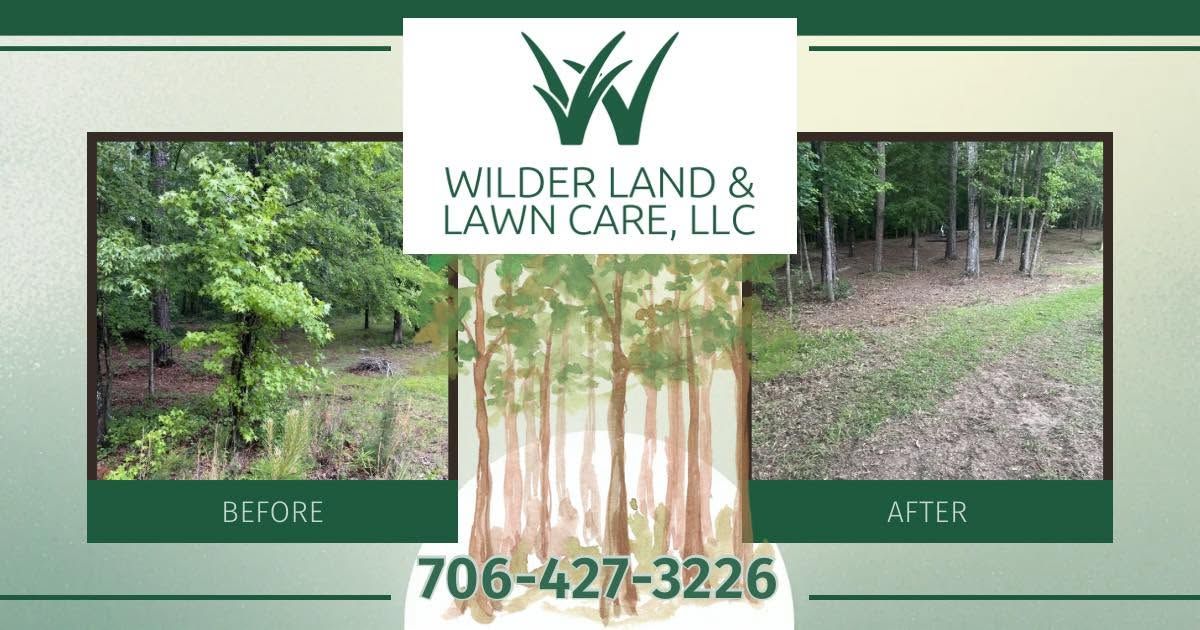
Rural properties in Central Georgia accumulate overgrowth at a pace that quickly makes acreage unusable—fence lines disappear into thick brush, building sites become inaccessible, and pasture edges fold back into woodland within a season or two. Wilder Land & Lawn Care LLC performs brush cutting and land clearing for property owners in Macon who need that overgrowth assessed, cut, and removed by a crew equipped to handle it at scale. The work produces a visible result: cleared sight lines to property corners, passable access routes, and ground that can actually be put to use.
The crew arrives with heavy equipment suited to the density of the vegetation on your property. After assessing the overgrowth, they cut brush by a combination of hand work and machine, then handle the resulting debris in whichever way fits your property and preference—chipping material on-site to reduce volume and return organic matter to the ground, or hauling it away entirely to leave a clean surface. The approach on any given job depends on acreage, how thick the vegetation has grown, and what the cleared land needs to look like when the work is finished.
Arrange an on-site assessment to discuss what your property requires and how the clearing should be sequenced.
How Land Clearing Addresses Dense Overgrowth
Brush clearing on rural acreage is not a single-pass operation. Vegetation that has gone unchecked for multiple growing cycles develops layered density—woody stems at the base, canopy coverage above, and root systems that resist simple mowing. Wilder Land & Lawn Care LLC addresses each layer in sequence: surface material is cut first to open sight lines, heavier stems are handled with equipment capable of processing them without leaving debris piles that create new obstacles, and the perimeter is worked to re-establish the boundary markers that were previously hidden.
Once clearing is complete, you can walk the boundary of your property, identify corners that were previously inaccessible, and evaluate the ground condition for whatever use you have planned—whether that's pasture restoration, a building pad, fence installation, or wildlife habitat work. The difference between on-site chipping and material haul-away is visible in the finished surface: chipped material settles into the ground and reduces erosion on sloped areas, while hauled debris leaves open soil ready for immediate follow-on work.
Properties in the Byron and Warner Robins areas range from active agricultural parcels to undeveloped tracts that have sat idle for years—the clearing approach shifts depending on whether the goal is to restore existing pasture or open raw land that has never been managed. Acreage, vegetation density, and end-use all factor into how the job is scoped and sequenced.
Common Questions About Brush Clearing Work
The questions below focus on how brush cutting and land clearing is actually performed and what affects the outcome on Central Georgia rural properties.
What type of equipment is used to cut thick, established brush?
For dense brush with woody stems, the crew uses tracked or wheeled equipment capable of processing material that hand tools cannot handle efficiently—typically brush cutters or mulching heads mounted on skid steers or tractors, combined with hand cutting in areas where equipment access is limited.
How is the cleared debris handled after cutting is finished?
Debris is either chipped on-site using a chipper that reduces volume significantly, or loaded and hauled off the property entirely—the choice depends on your preference and what the cleared area needs to look like or be used for immediately after the work is done.
What happens to property lines that were obscured by overgrowth?
The crew works sight lines toward boundary markers during clearing, making corners and fence lines visible again so you can walk and verify your property boundaries once the work is complete.
How does vegetation density affect the way clearing is scoped?
Heavier, older brush with established root systems and thick stems requires more equipment time and more passes than lighter seasonal growth—acreage alone does not determine the scope, and an on-site assessment identifies what the specific vegetation on your property requires.
Why does the sequence of cutting matter on multi-acre properties?
Working in a planned sequence—establishing access first, then clearing outward from a starting point—prevents the crew and equipment from becoming blocked by the debris generated by earlier cuts, which reduces total work time and keeps the job progressing without backtracking.
Wilder Land & Lawn Care LLC also performs brush cutting and land clearing in Warner Robins, Bibb County undeveloped areas, Byron, Centerville, and Kathleen. To discuss the condition of your property and what a clearing project would involve, contact Wilder Land & Lawn Care LLC directly at (706) 427-3226 to schedule a site visit.