Debris Left Behind After a Storm Creates Ongoing Hazards
Tree and storm debris hauling in Macon for downed limbs, scattered brush, and storm material blocking access or use of the property
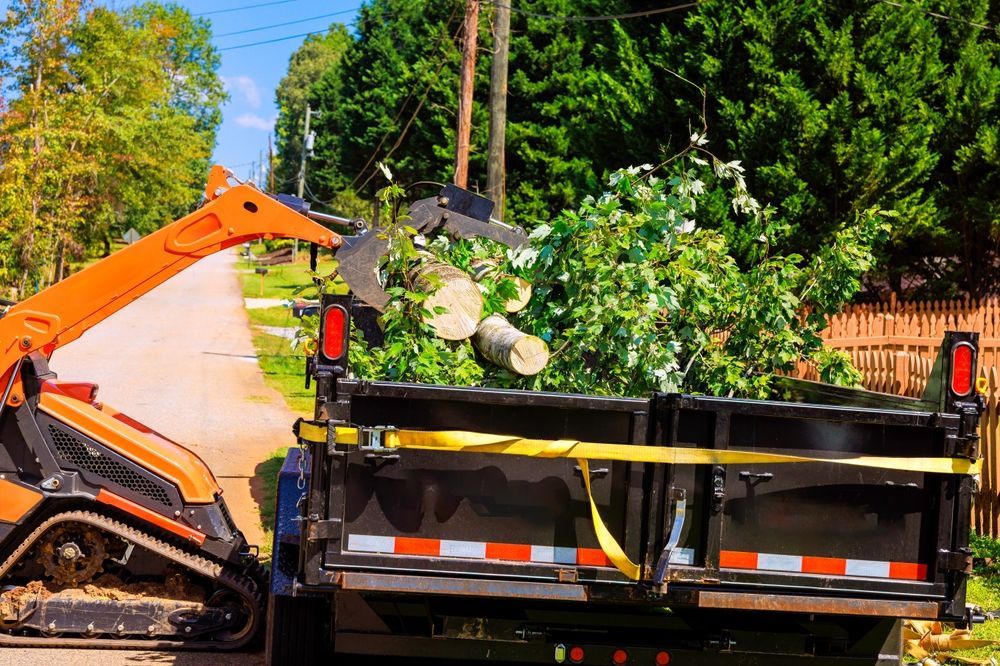
A property covered in downed limbs, split trunks, and scattered brush after a storm is not simply messy—it is functionally unusable until the material is removed and disposed of properly. Wilder Land & Lawn Care LLC hauls and disposes of storm debris for residential and commercial properties in Macon, handling the entire process from on-site loading to off-site disposal so nothing is left for you to arrange separately. The crew arrives, assesses the volume and type of material on the ground, and works through the property completely rather than removing only what is easy to reach.
The process starts with a site assessment on arrival to determine debris volume, whether any material needs to be cut down before it can be loaded, and what equipment is appropriate for the job. Larger limbs and trunk sections are cut to a manageable size before being loaded into hauling trucks; smaller brush and scattered material is collected and loaded in passes across the property. Everything is removed off-site for proper disposal—no debris is left in piles at the property line or staged for a future trip.
Arrange a site visit to assess the debris volume on your property and confirm the scope of removal needed.
What the Hauling Process Actually Involves
Storm debris hauling is not a single task but a sequence of decisions made based on what is on the ground. When large limbs or split trunks are present, cutting must happen before loading—the crew determines on arrival which material can be loaded whole and which needs to be broken down first. This distinction matters because properties with mature trees, which are common in established Macon-area neighborhoods like Byron, often produce debris that includes heavy trunk sections rather than just brush, and those pieces require different handling than a scattered pile of smaller limbs.
Once the work is finished, the observable result is a property that is clear and ready to use—no piles staged in the yard, no material pushed to the edge of the lot, and no debris remaining in planted areas or along fence lines. Wilder Land & Lawn Care LLC handles the full removal cycle, which means the disposal step is included rather than left as a separate task. What you see when the crew leaves is ground that is accessible and clear, not partially managed.
The approach scales to both residential lots and commercial acreage, and the crew works through the property in a complete pass rather than spot-treating visible areas. Properties with significant tree cover, large canopy trees, or multiple structures to work around take longer to assess and clear than open lots with lighter debris—that evaluation happens on arrival before any work begins.
Answers About How the Work Is Done
The following questions address how storm debris hauling is performed, what the crew handles on-site, and what the property looks like once the work is complete.
What does the crew assess when they arrive before starting debris removal?
The crew evaluates debris volume, whether trunk sections or large limbs need to be cut before loading, which areas of the property are accessible with equipment, and whether any material is positioned in a way that requires special handling before it can be moved.
How is large material like split trunks or fallen limbs handled before it is loaded?
Trunk sections and oversized limbs are cut down to a size that can be safely loaded into the hauling trucks—this cutting step happens on-site as part of the debris removal process, not as a separate tree service that you need to schedule first.
Why does the debris volume assessment matter before pricing or scheduling the work?
Storm events vary significantly in what they leave behind: a single downed limb and a yard covered in trunk sections require different equipment, crew time, and number of truck loads, so the on-site assessment is what makes the scope of the job accurate.
What does the property look like when the crew finishes, and how do you know the work is complete?
The property is cleared of all storm debris—no piles remain at the curb, along fence lines, or in planted areas, and all material has been hauled off-site for disposal rather than consolidated and left.
How does the presence of mature canopy trees affect the debris removal process on Macon-area properties?
Properties with established hardwoods generate heavier debris with larger trunk sections and more extensive root damage patterns than younger plantings, which means the cutting and loading sequence takes longer and typically involves more truck loads than a property with ornamental trees alone.
Wilder Land & Lawn Care LLC also handles storm debris hauling in Warner Robins, Bibb County undeveloped areas, Byron, Centerville, and Kathleen. To review the debris on your property and confirm what removal involves, call (706) 427-3226.